Spod
A shopping cart that comes to you
The body of a robotic shopping cart, for shoppers whose hands are already full.
Role: Industrial design consultant. Critique, human factors, form, colour and finish, CAD, visualisation, mould plan.
Team: Balaji Viswanathan (founder and CEO, Invento Robotics), Bharath Kumar (co-founder and CTO), Invento's engineering team.
When: 2019, six days.
Tools: Pencil, SolidWorks, KeyShot, Photoshop, InDesign.
Status: Concept and launch design, shown at the World Economic Forum. The pandemic stopped the series prototype.
36 hours
of design, critique to launch renders
WEF 2019
Taken to the World Economic Forum's Annual Meeting of the New Champions
5
Questions before the first sketch
Hands full before the cart is
A big store has no shopkeeper who knows you. Invento built Spod to bring that help back: a cart that meets you at the door, carries the basket and leads you to each shelf.

Phone, coffee, child. The cart gets a hip.
The robot had a brain. Its body was a box
Balaji saw a cart I had designed with Technibilt, Wanzl's US arm, and asked me for Spod's next body. His engineers had built two bodies. The robot inside could steer by LiDAR and recognise faces. Neither body told a shopper what to do.
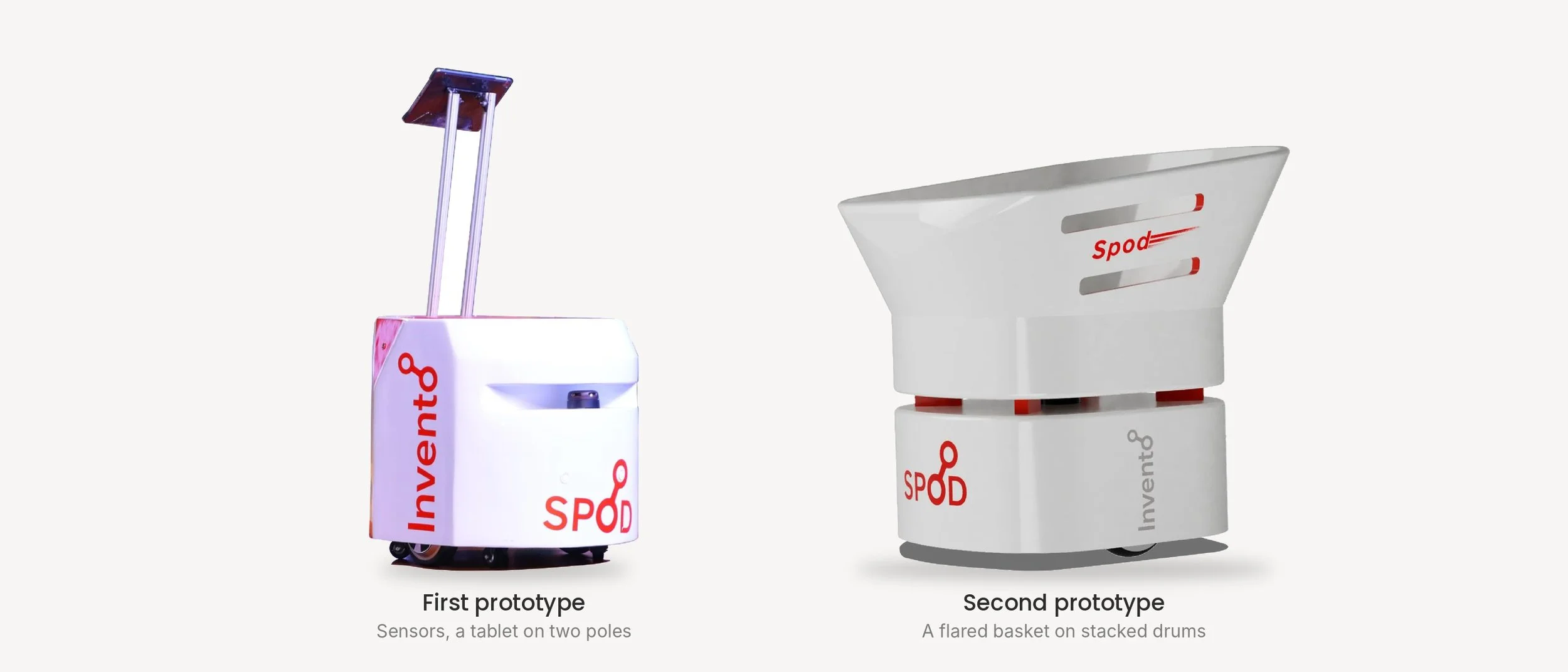
Invento's first two bodies. Sensors, but no place for a hand.
Five questions before the first sketch
The brief was one line: futuristic, with a sense of speed. I sent back questions. The handles were styling. The extra height was empty volume. A clear cover would hurt the LiDAR.
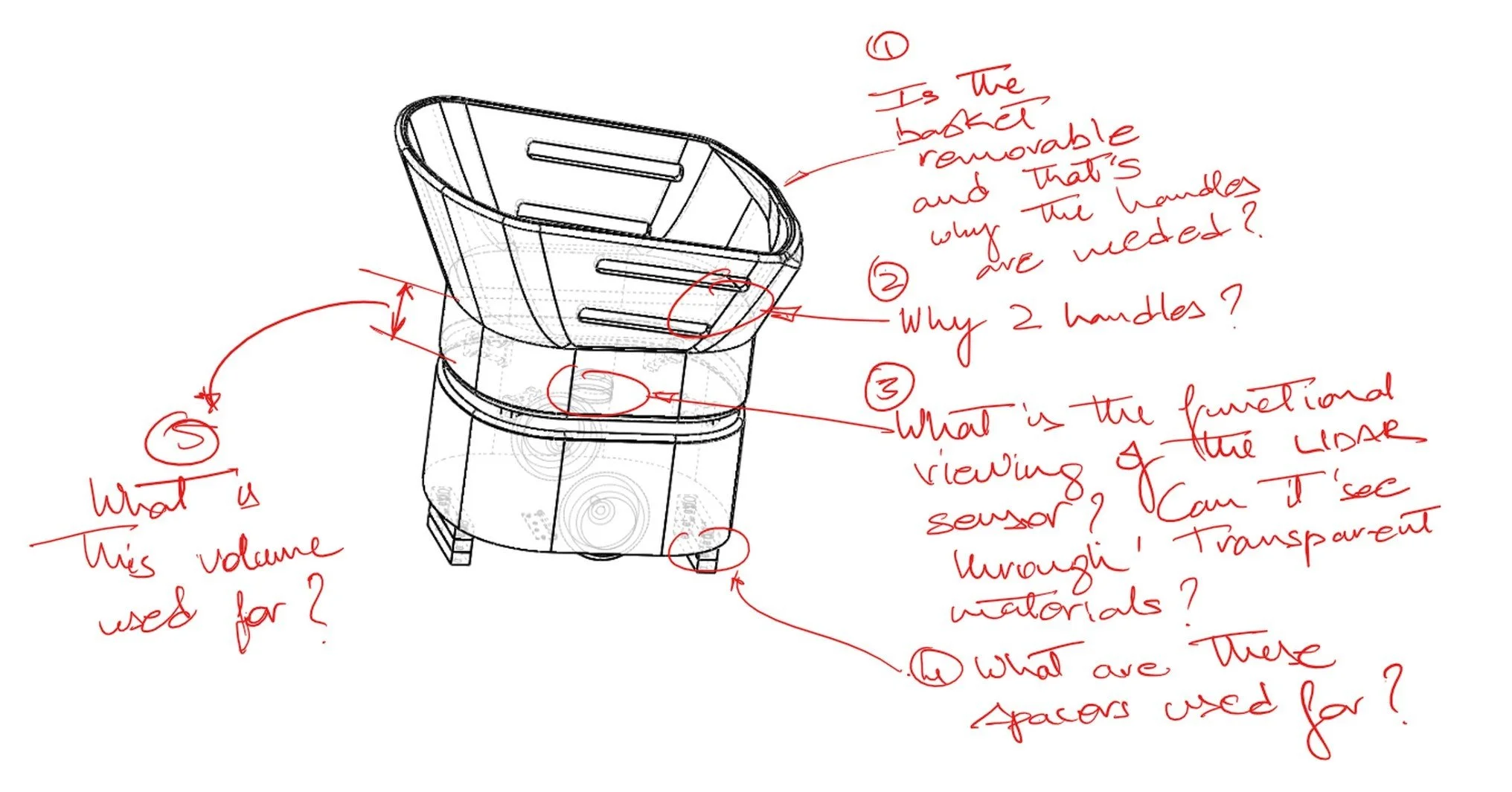
My markup of the engineering model. Each answer removed a guess.
Every item meant a bend
The basket floor sat near the knee, and a cart is loaded dozens of times a visit. I raised the rim and handle to the elbow, about a metre up.
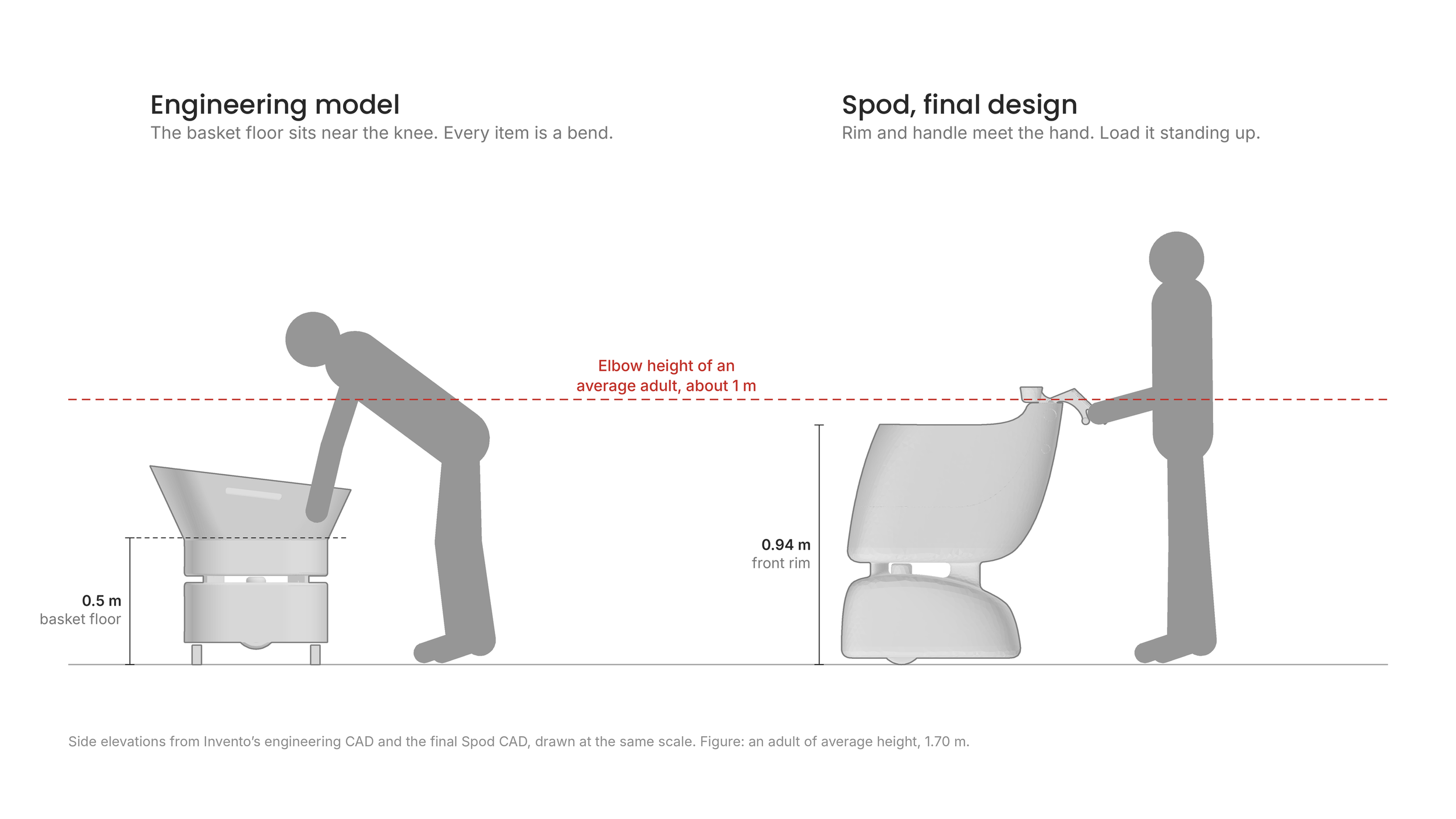
Before and after, to scale.
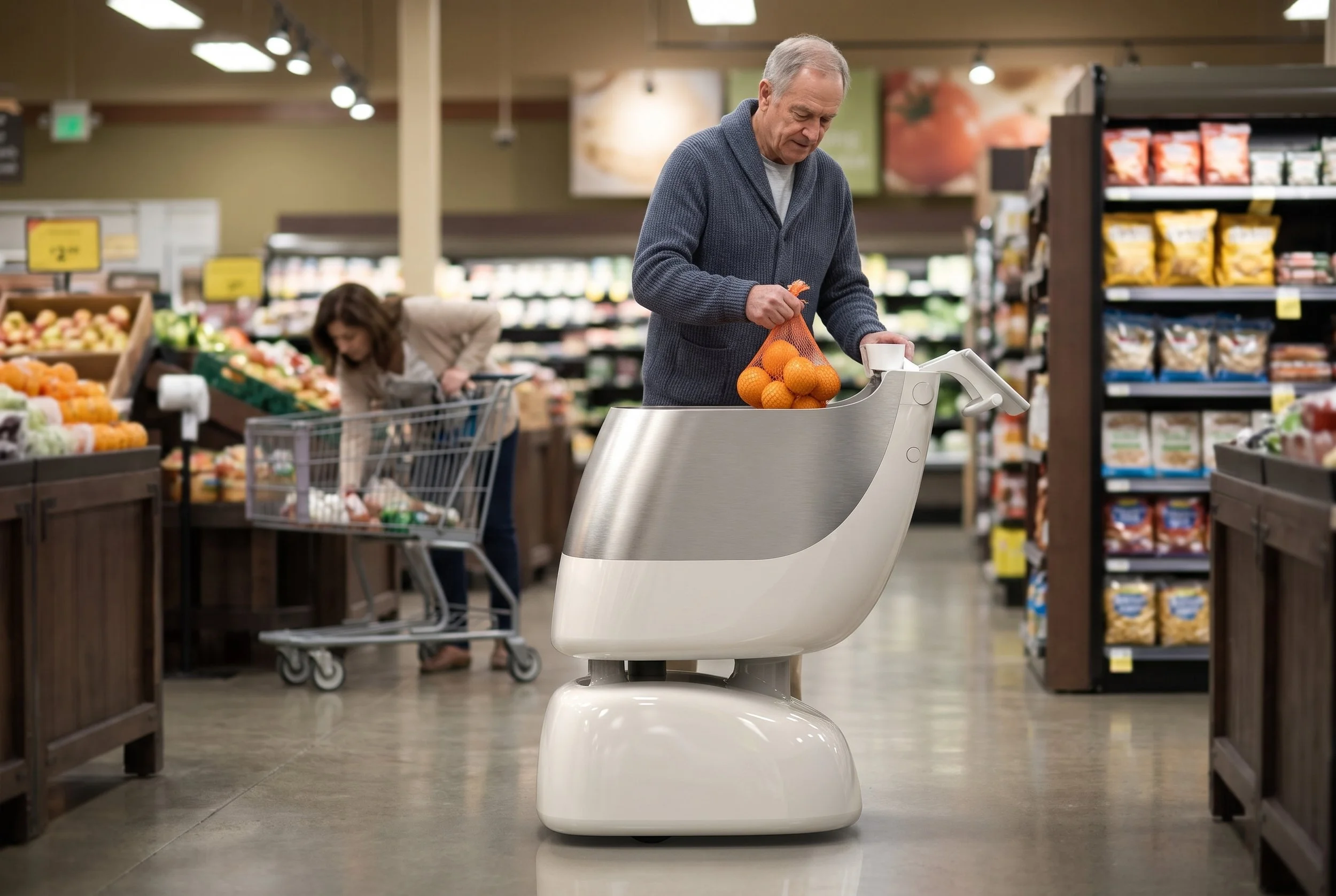
Loaded standing up.
The company had already written the brief
Futuristic gives a designer nothing to measure against. Invento's seven published values did. Four of them could be drawn.
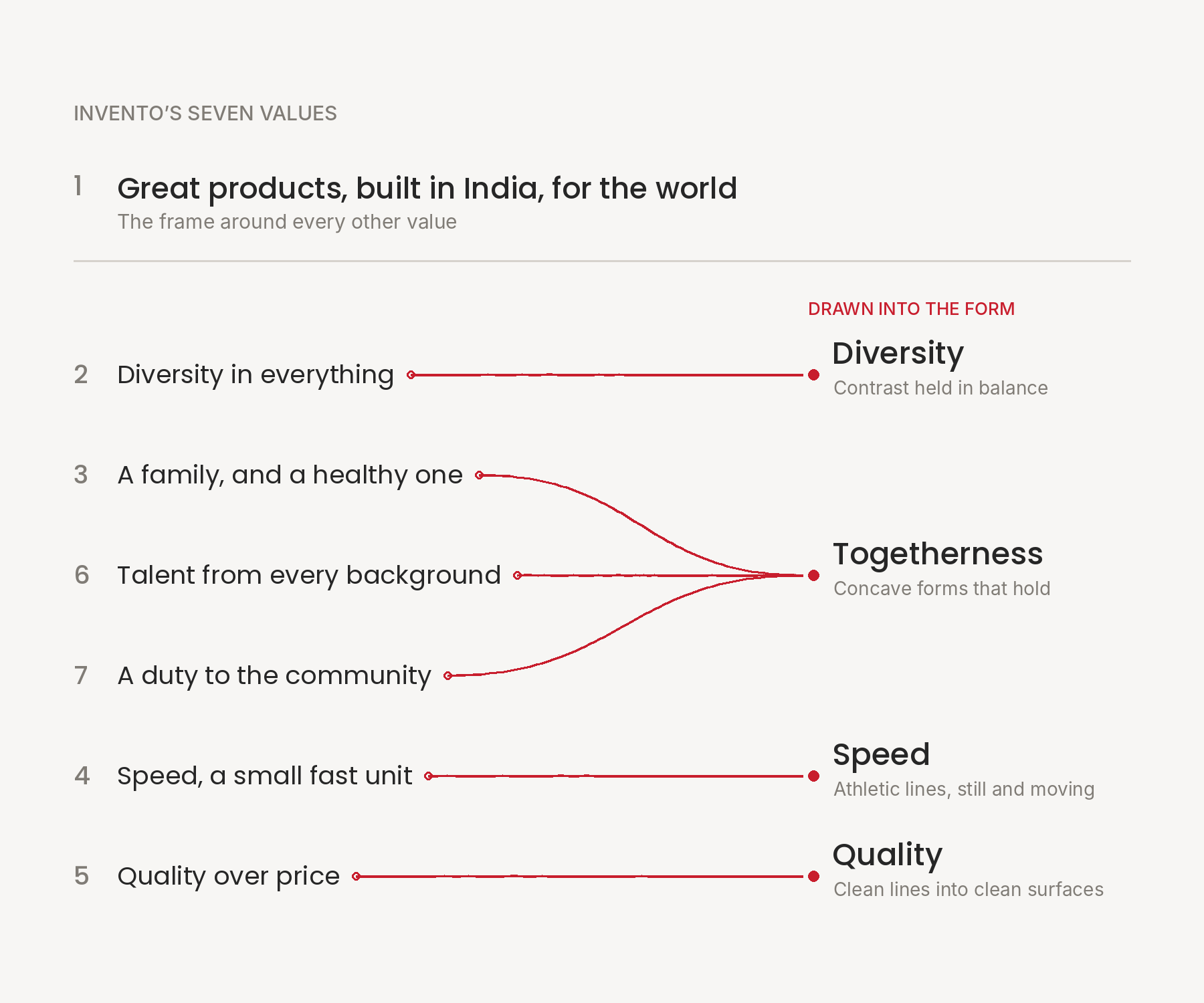
Seven values. Four became form.
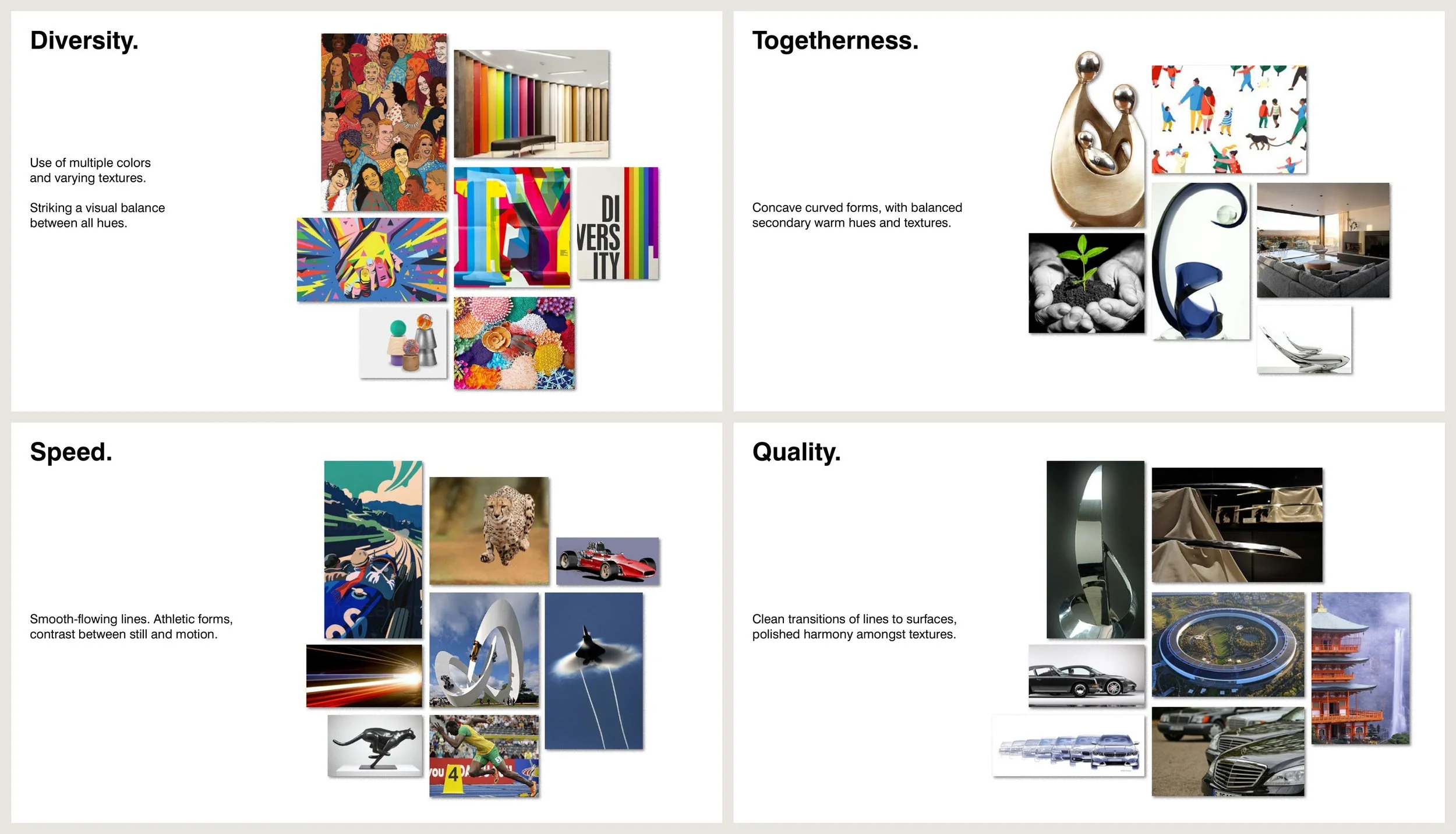
One moodboard per value.
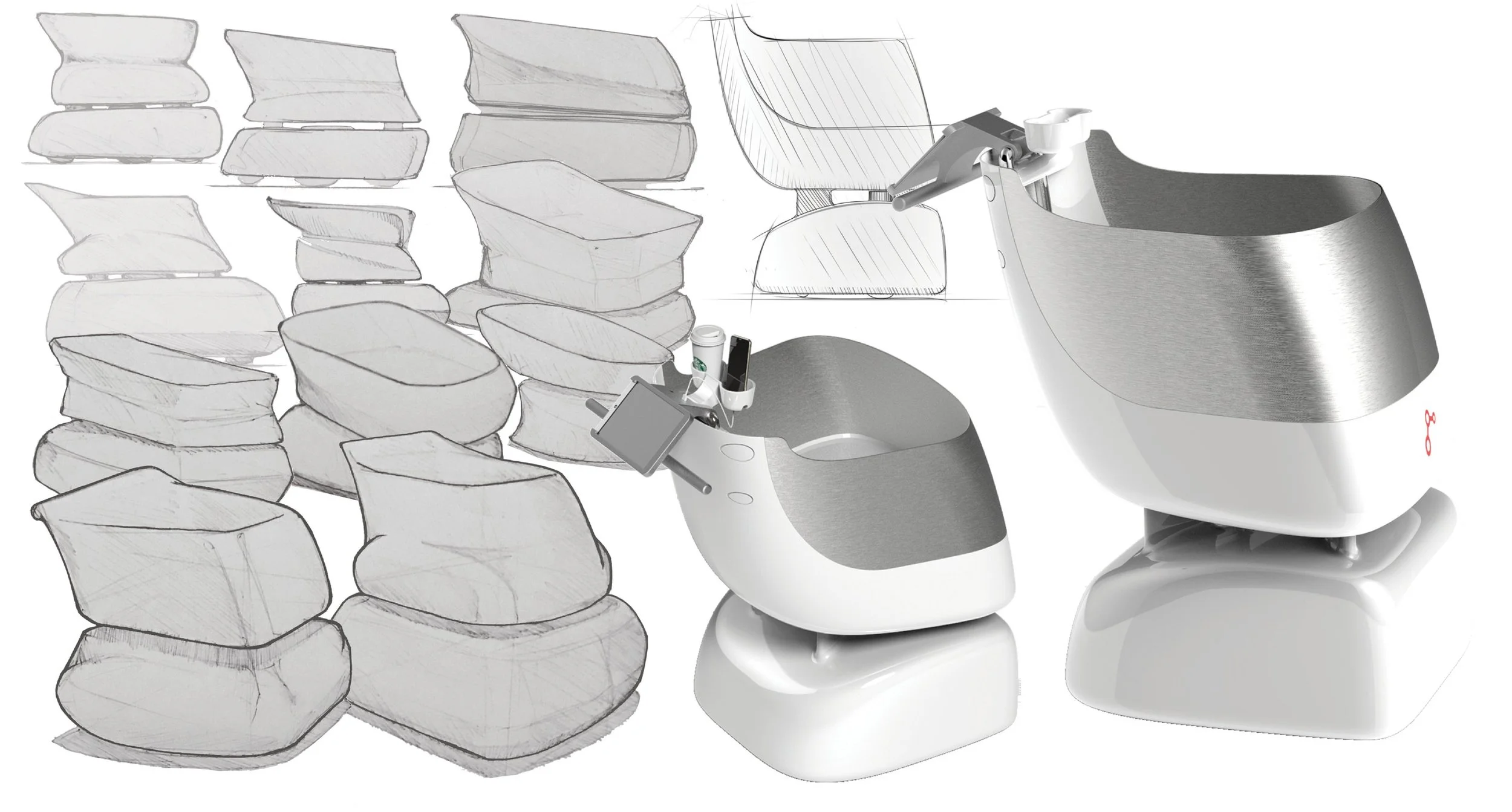
From sketches 10 and 11 to CAD.
Too small, too shiny
My first model was polished chrome on a compact base. Spod grew to a metre, gained a real handle and a tablet arm, and traded chrome for brushed aluminium that hides scuffs.
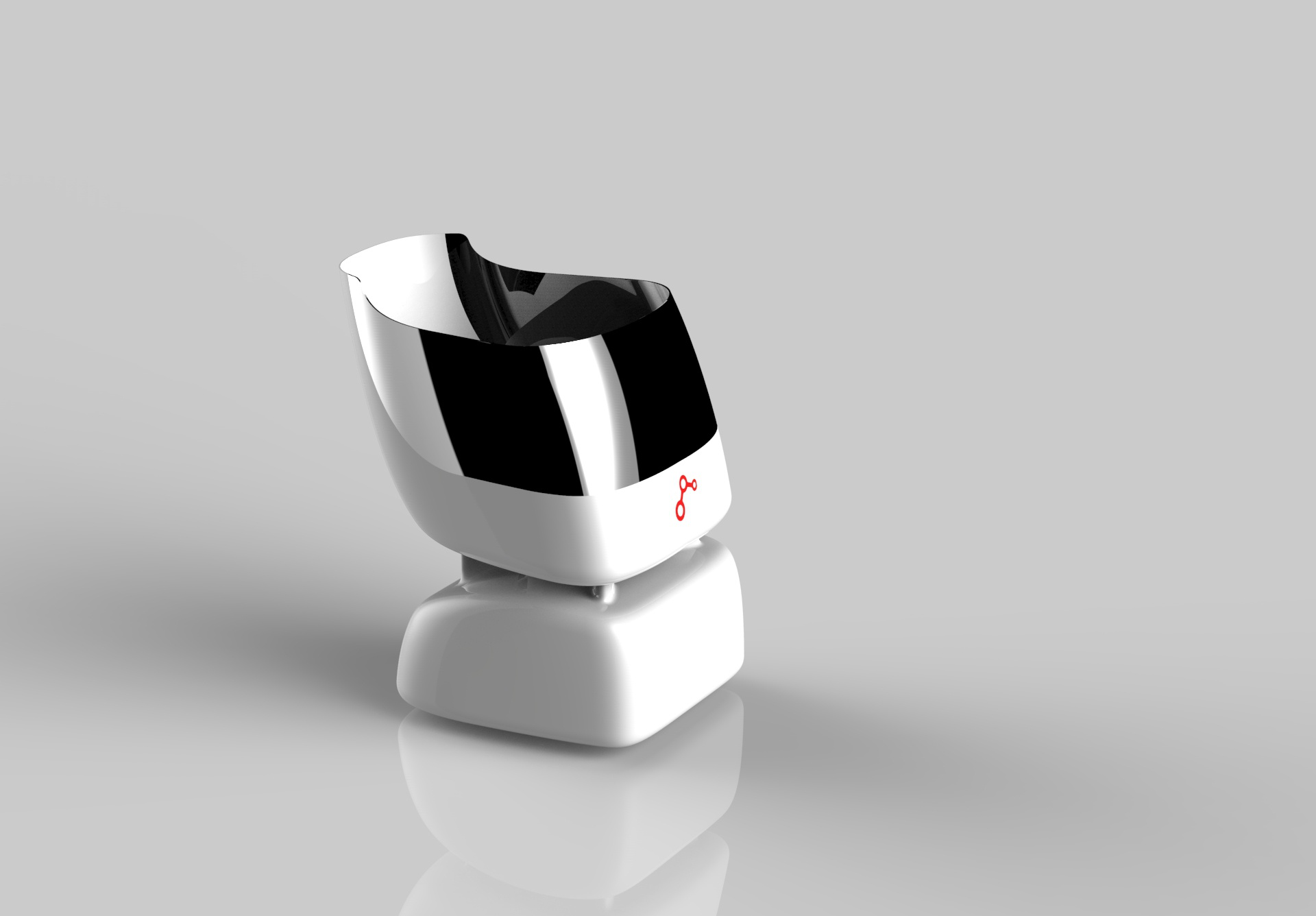
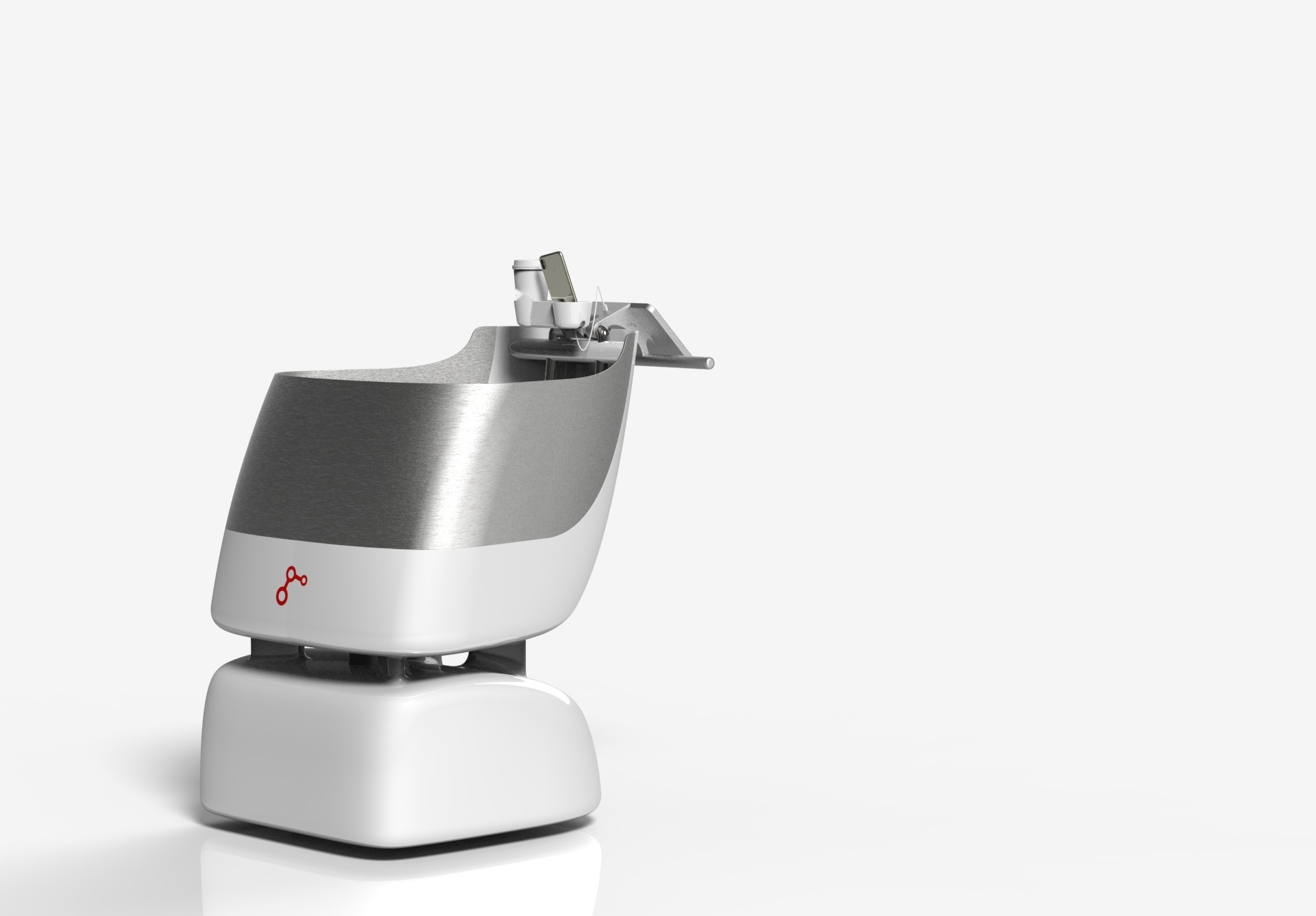
Engineering model, first model, final design.
Four values, one body
Togetherness is the concave shell that holds the basket. Speed is the rim rising toward the handle. Quality is the clean line where aluminium meets white.
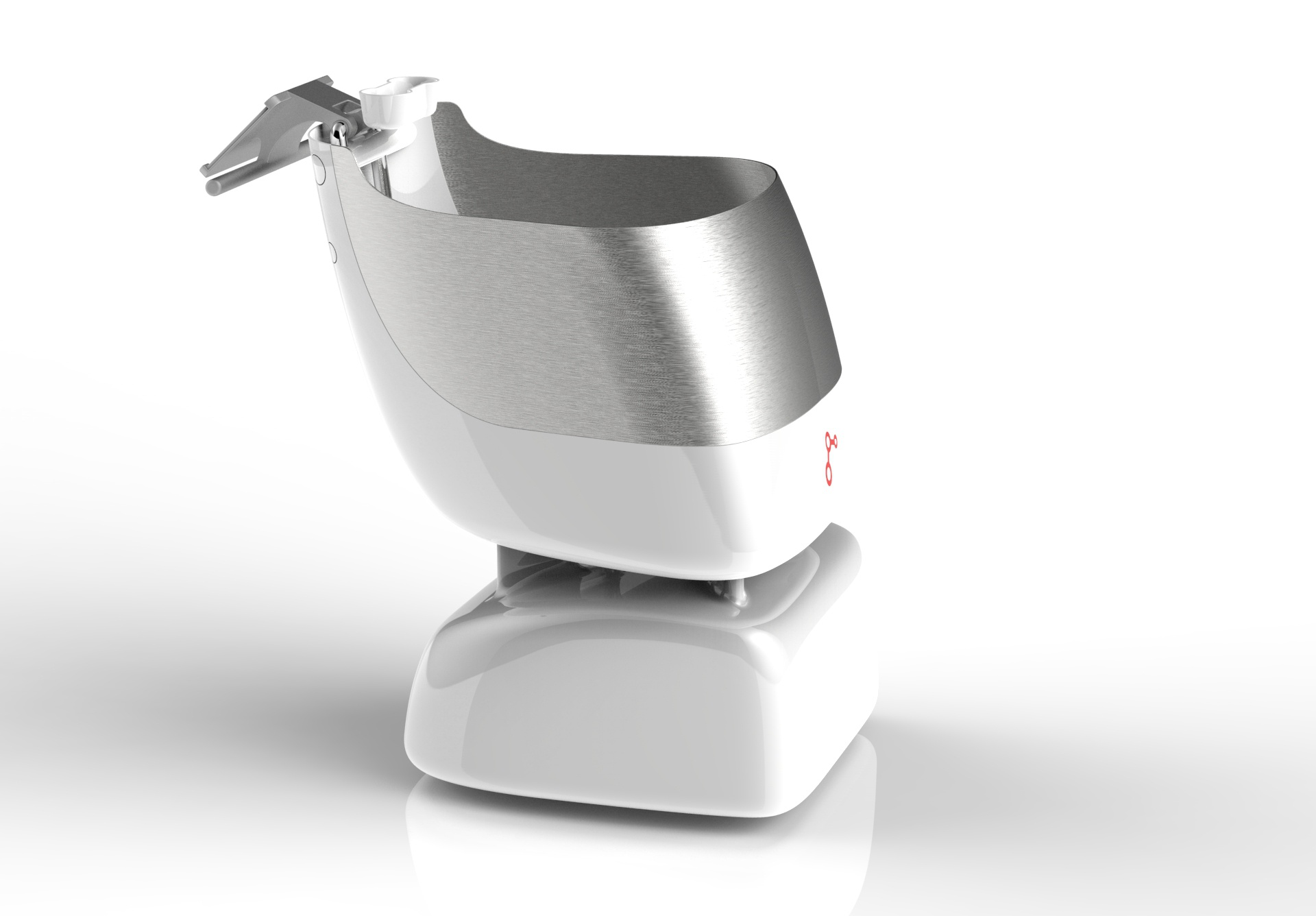
Spod, final design.
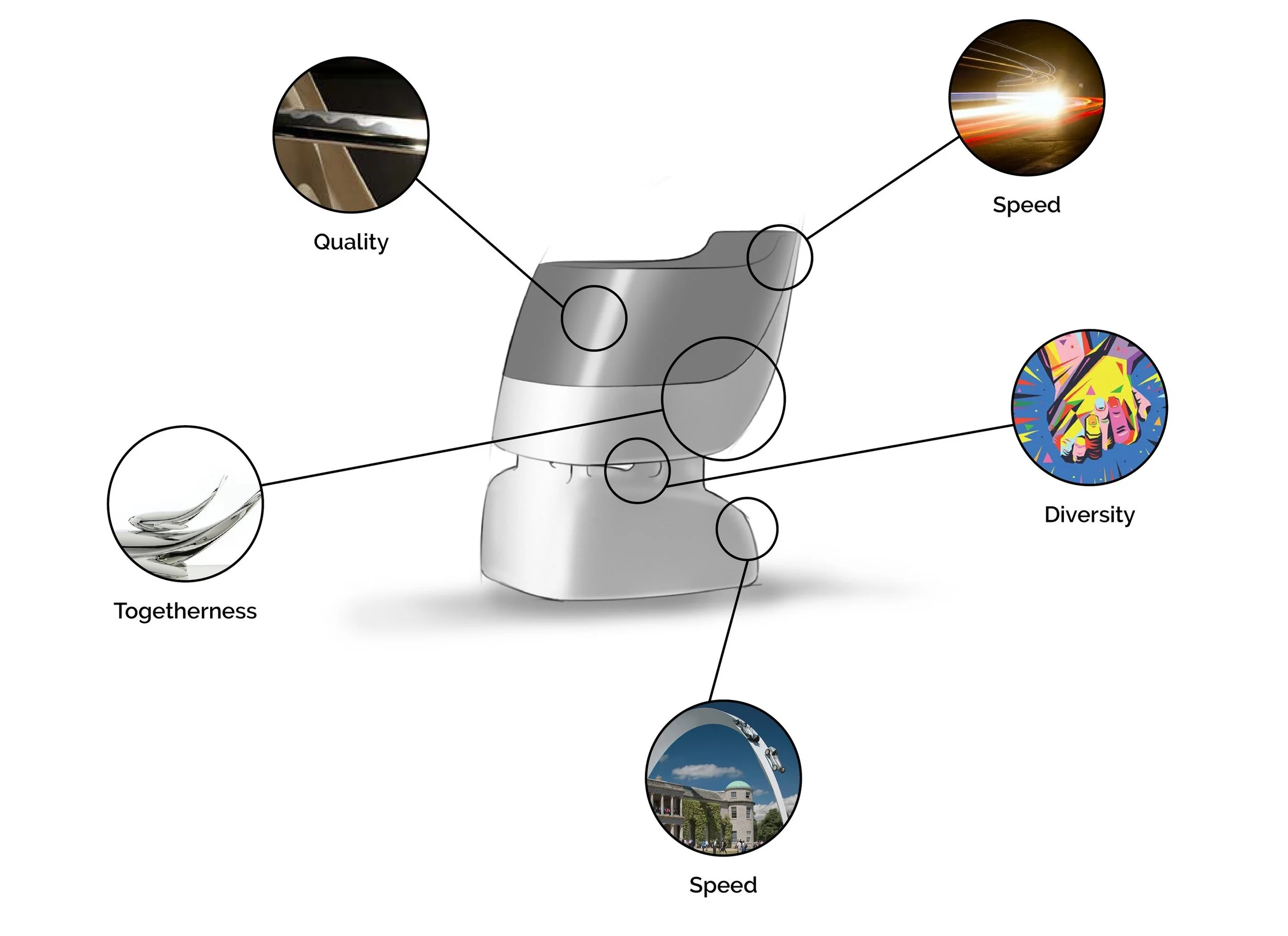
Where each value lives on the form.
Both hands back
A phone with the list, a coffee, a bag. Each got a place at the handle, with USB charging and a tablet where the eyes already are.
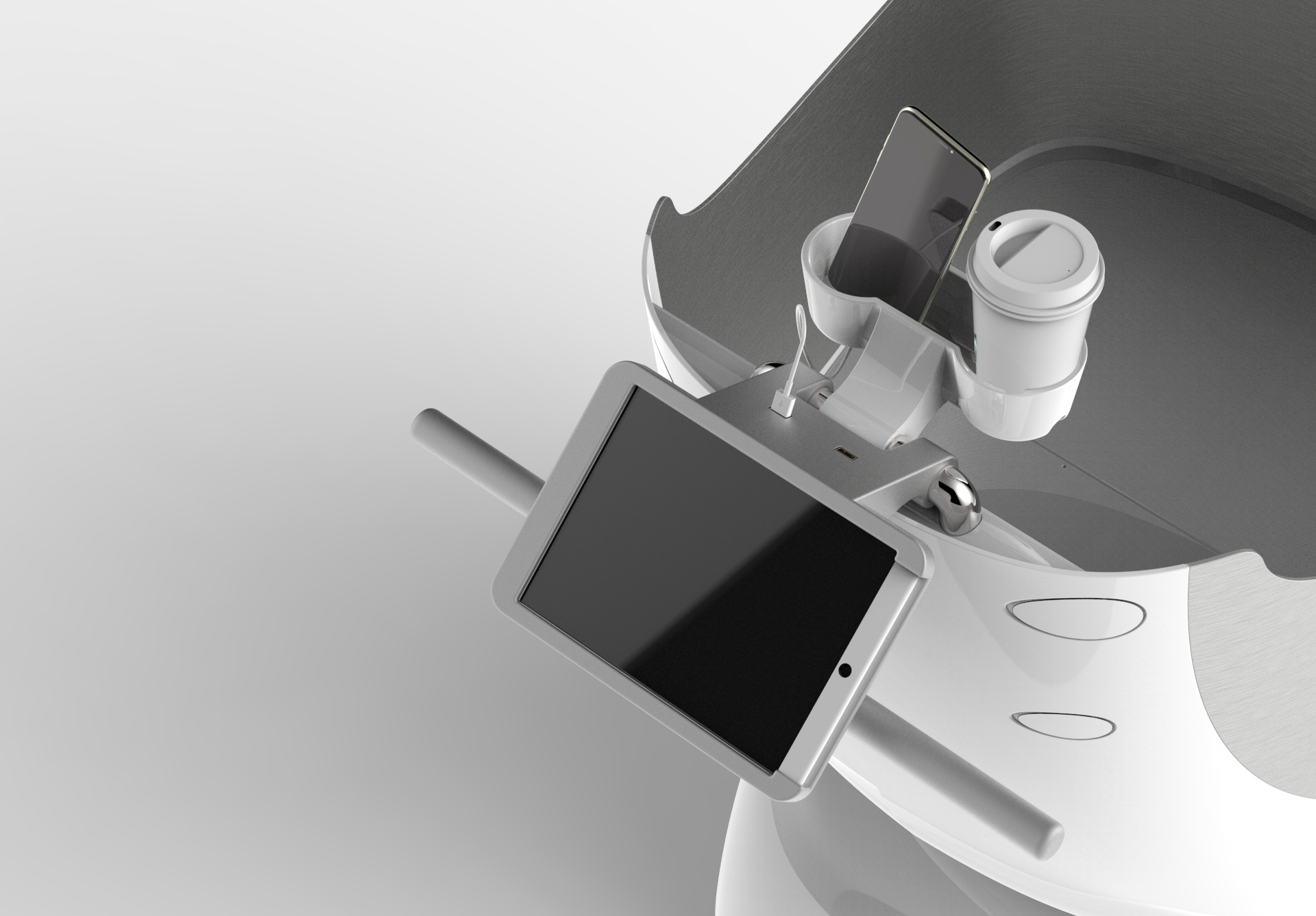
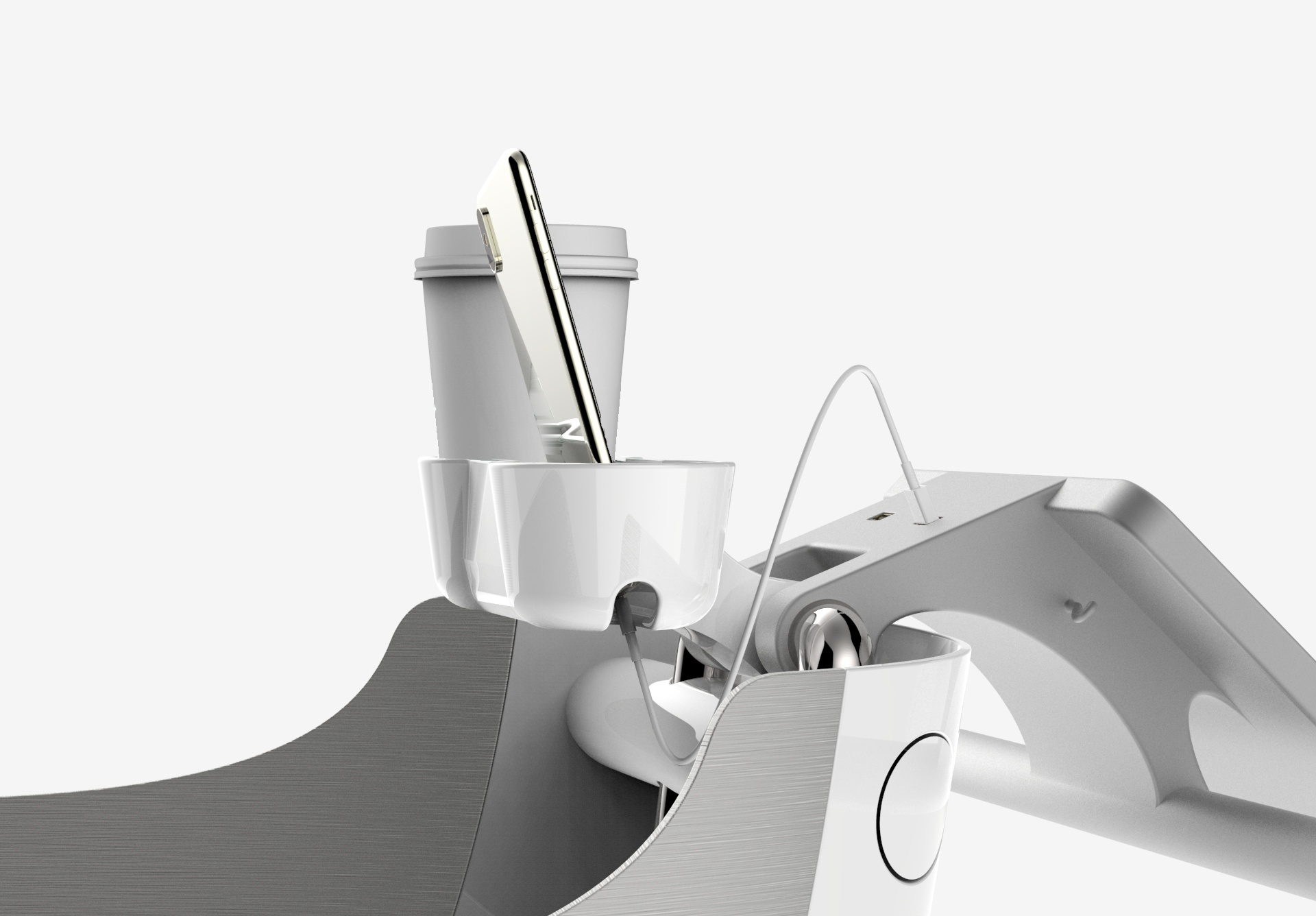
The handle zone.
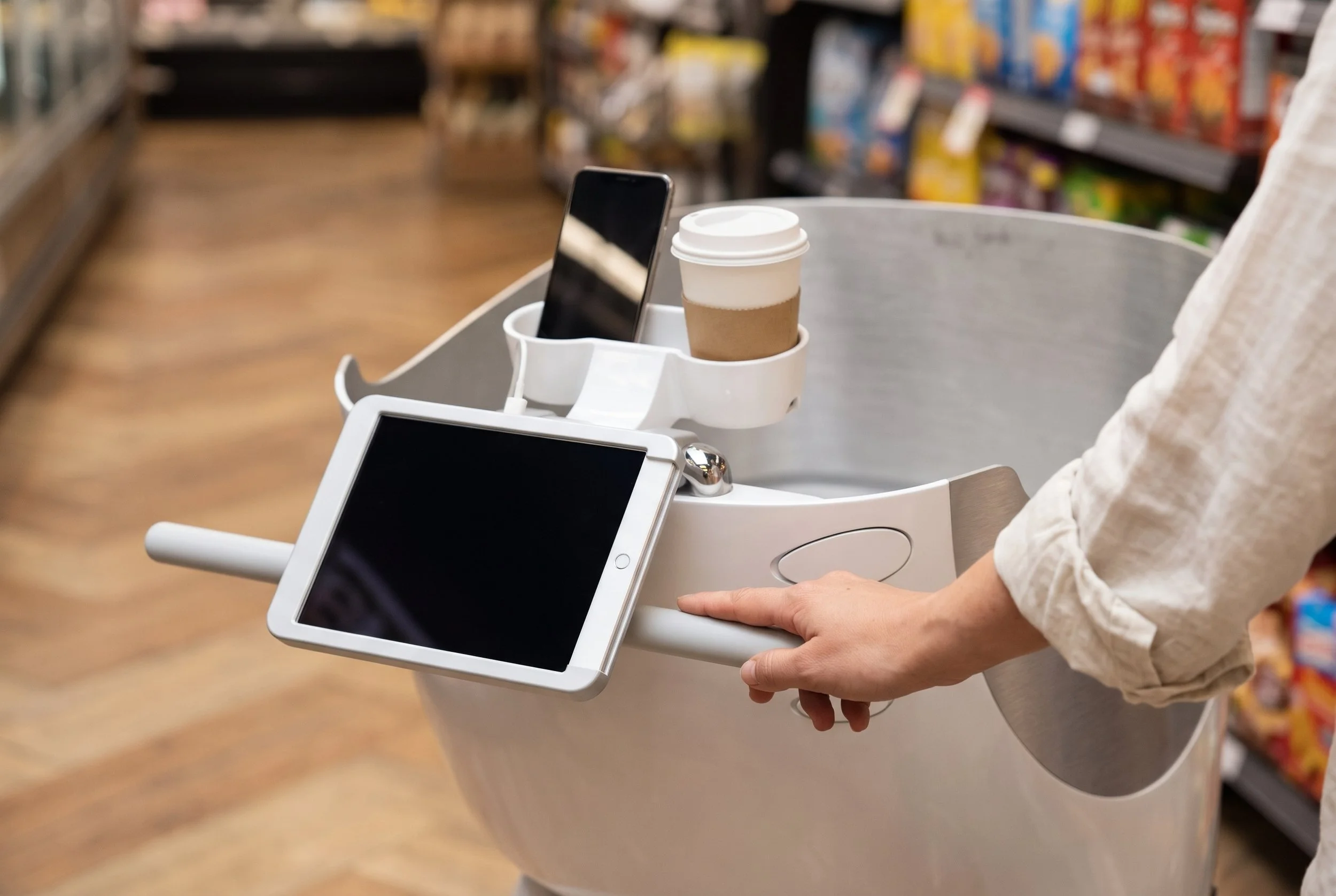
Hands free, list in view.
Leave the robot's eyes open
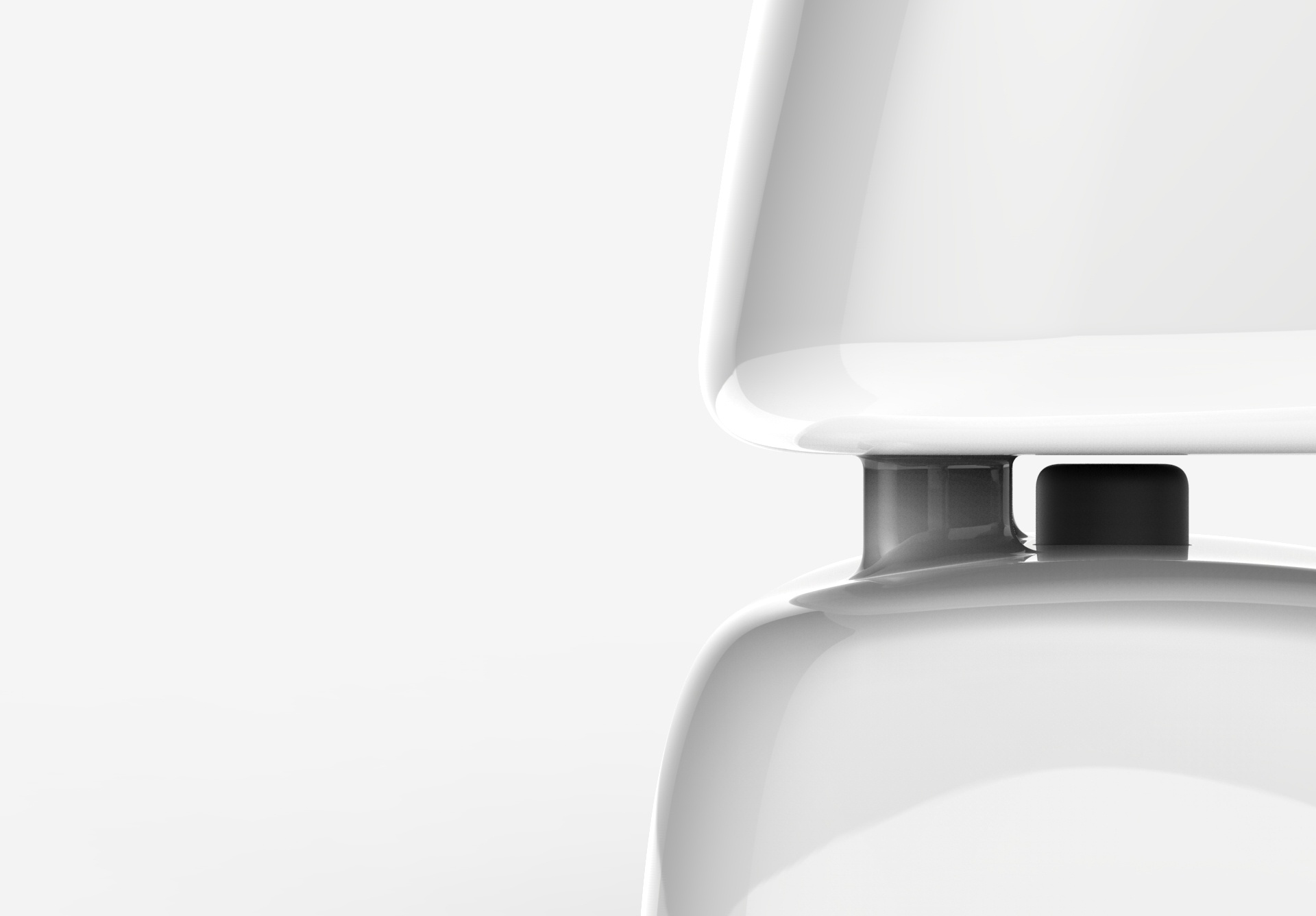
The LiDAR needs a clear sweep just above the base. Four slim posts lift the body and leave that band open. It is also why a heavy robot looks light.
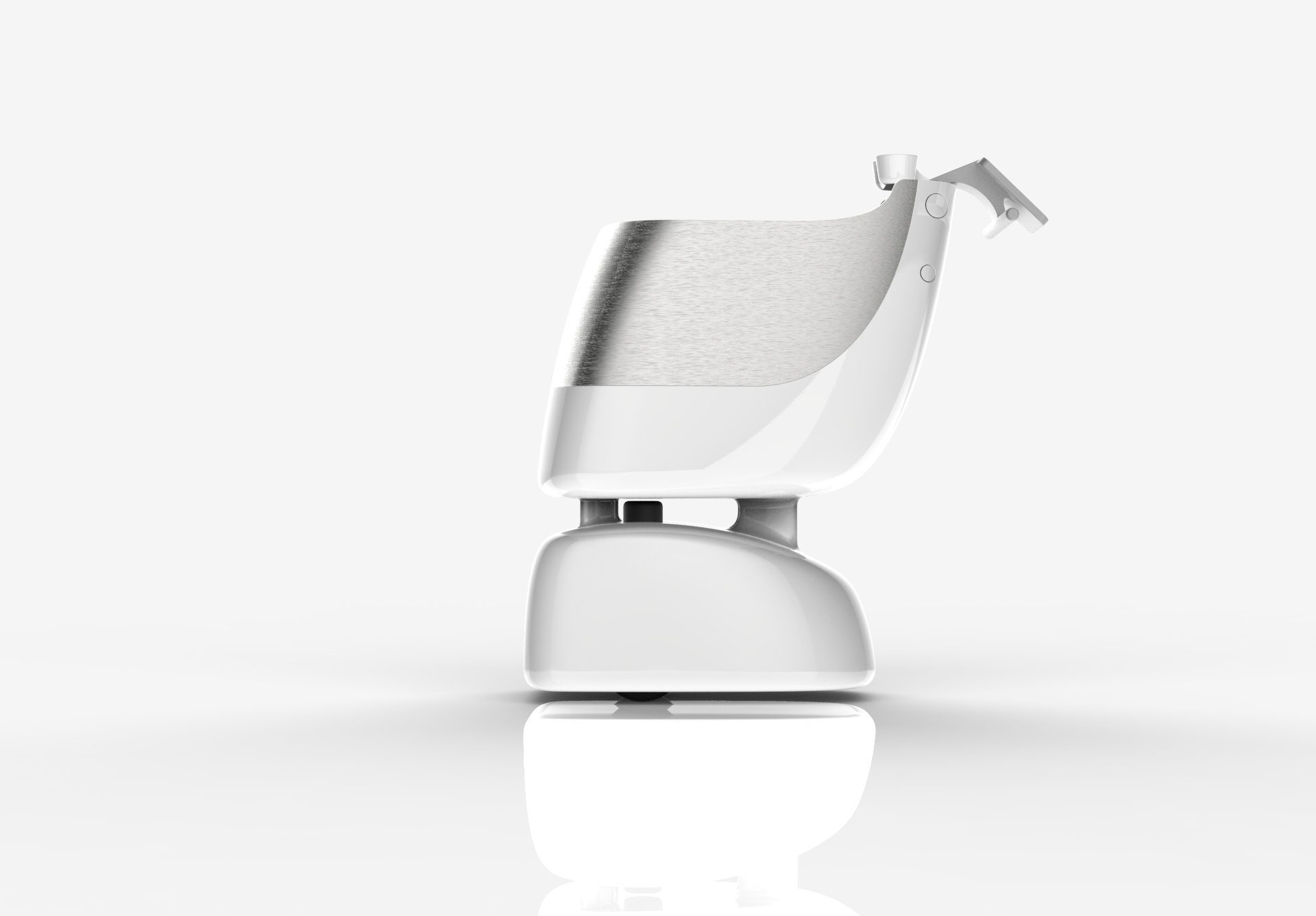
Four posts, one open band.
Three surfaces and one mark
Off-white ceramic finish over ABS, warm and easy to wipe. Brushed aluminium on the basket. A dark sensor band. The big red lettering went, and one Invento mark stayed.
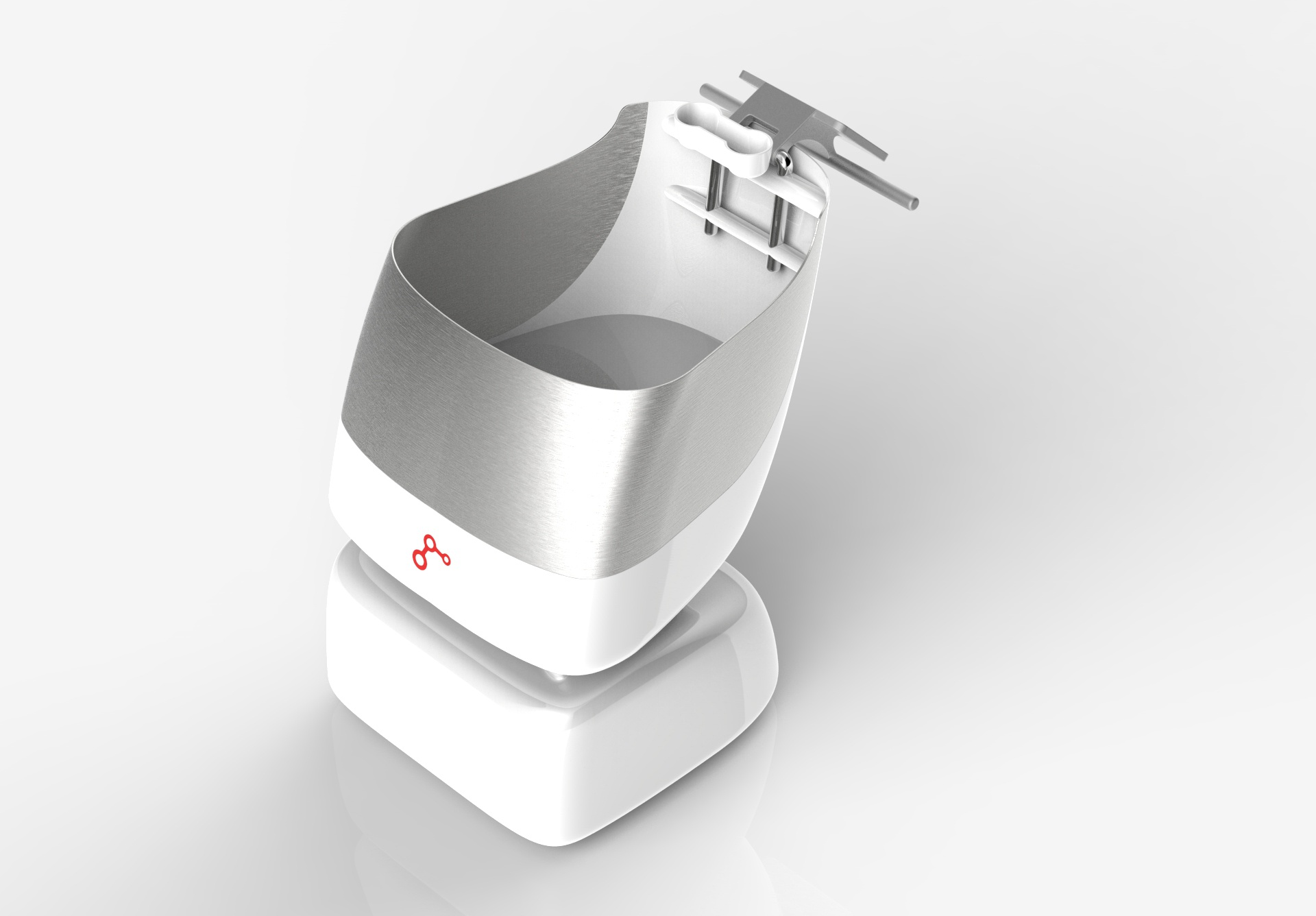
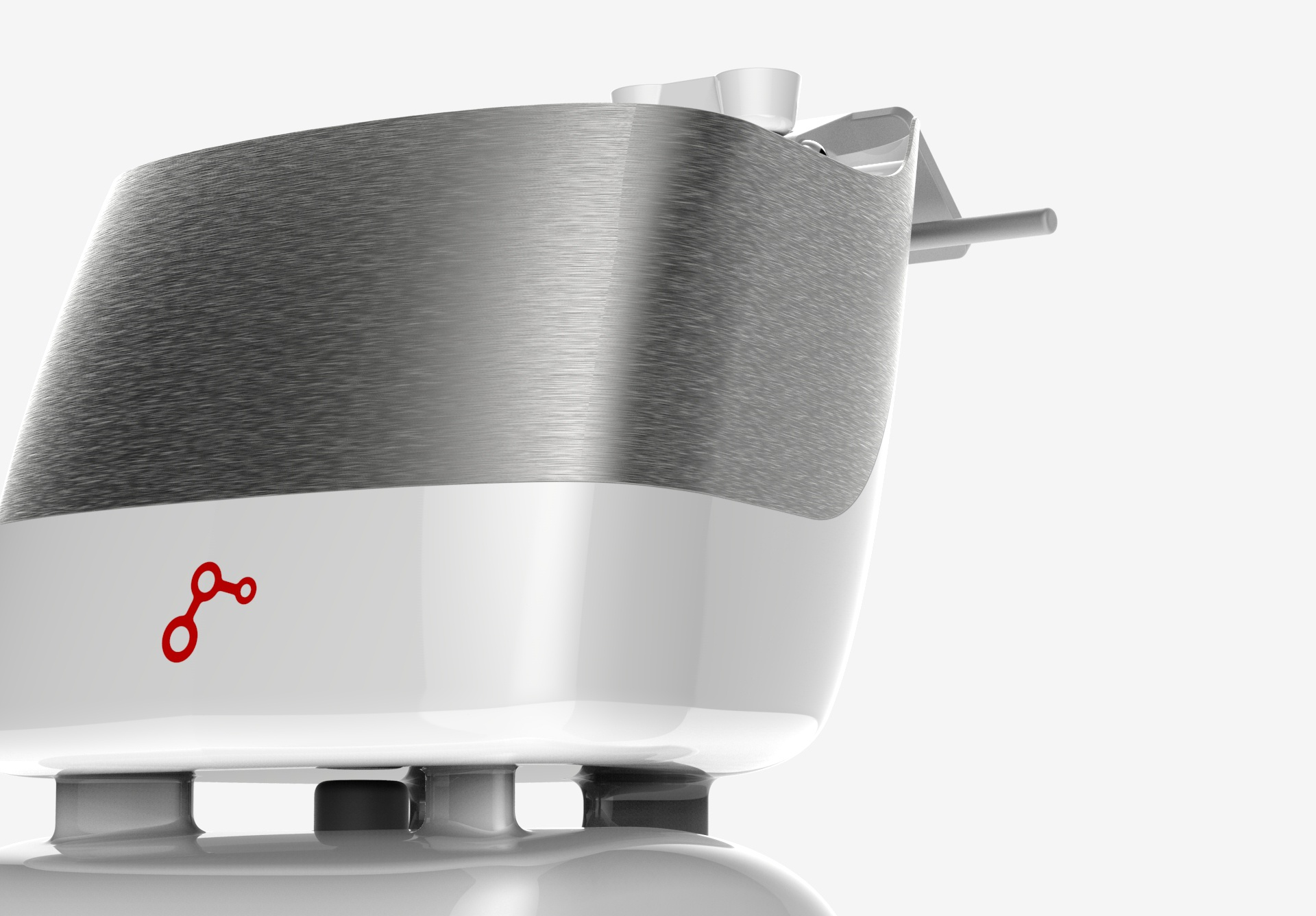
Aluminium, white, one mark.
Drawn to be built
Invento built in-house, laying fibreglass over moulds. I handed over native CAD, KeyShot scenes and a cheap mould plan: MDF layers cut on the workshop's CNC router, stacked into a pattern.
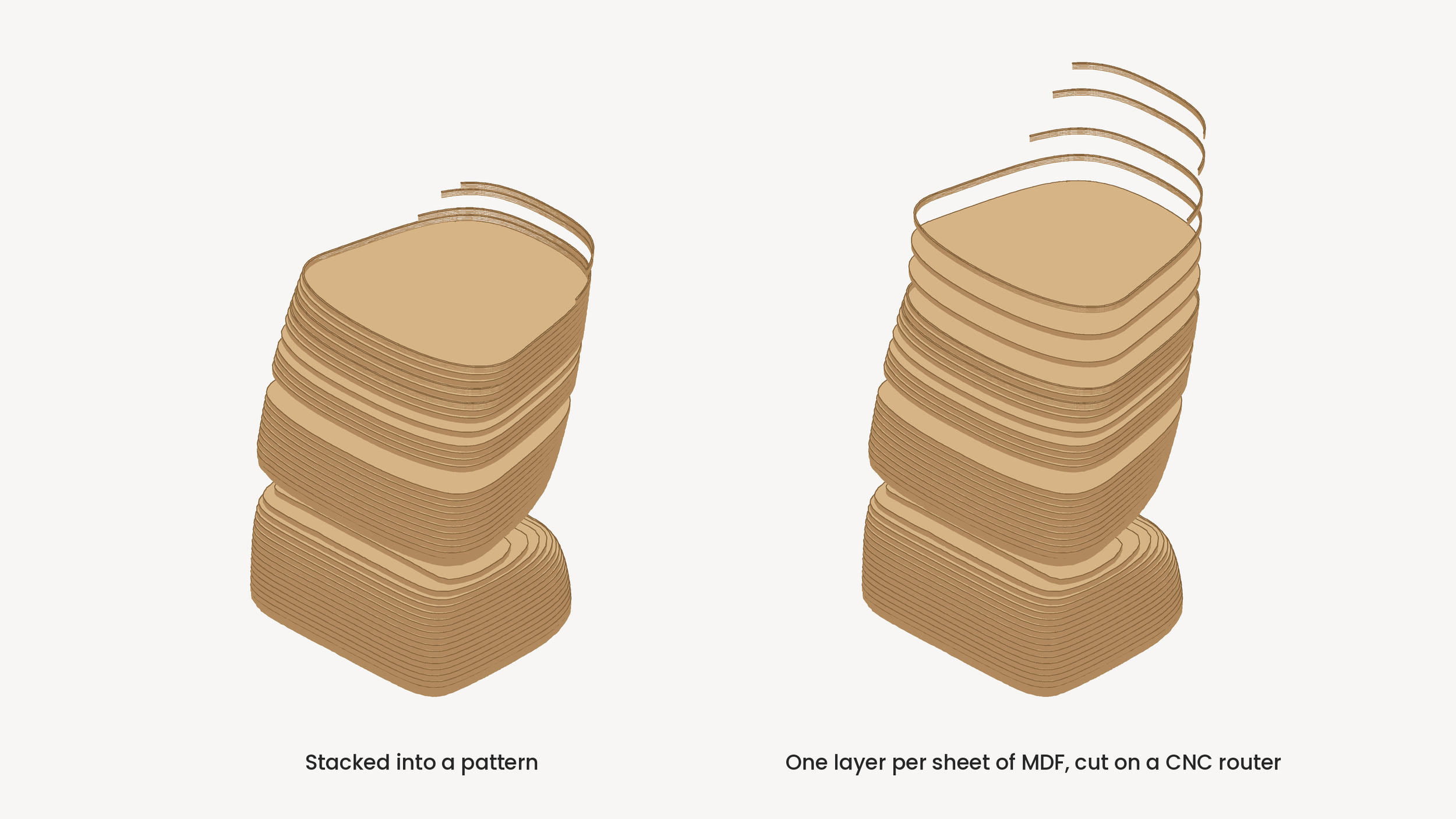
The pattern plan, layer by layer.
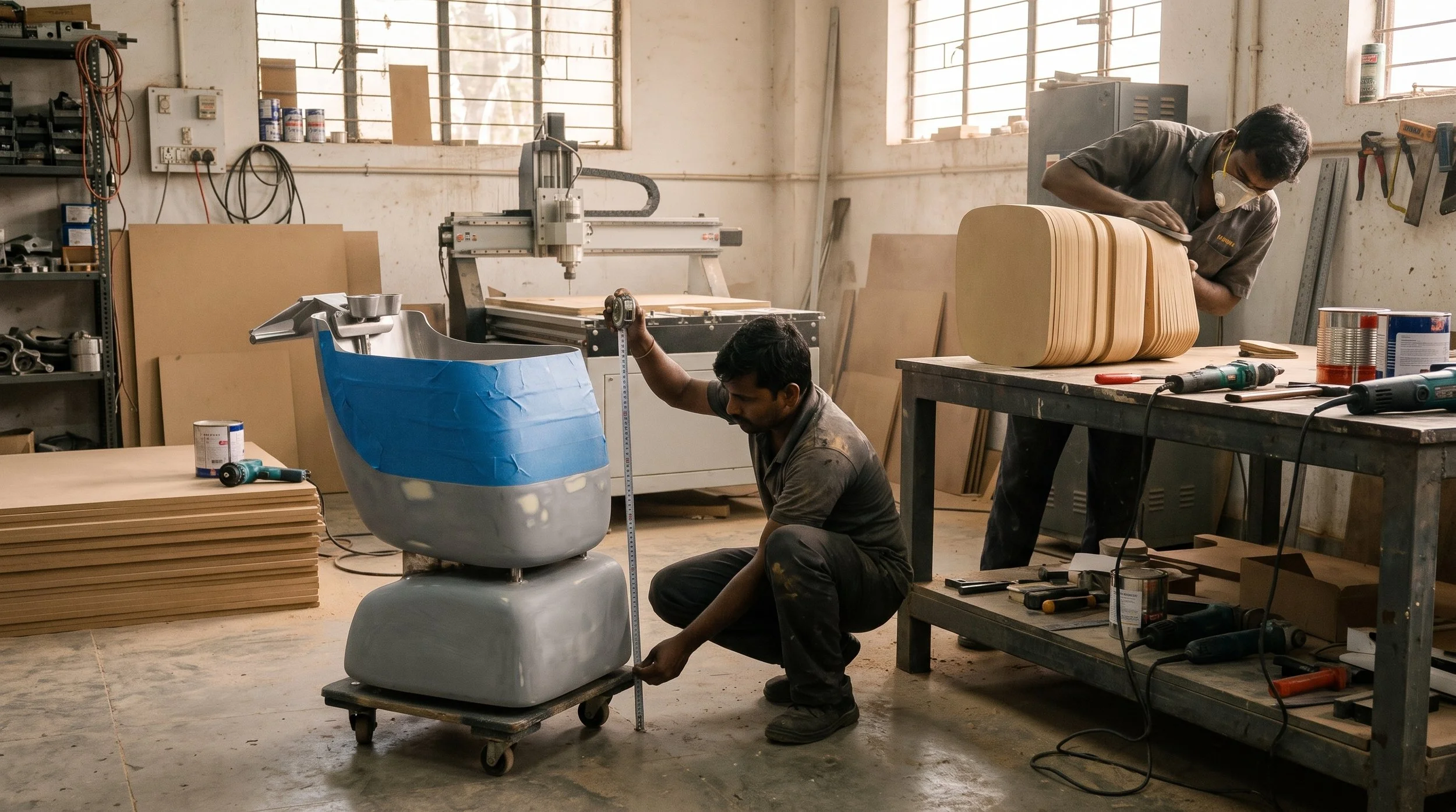
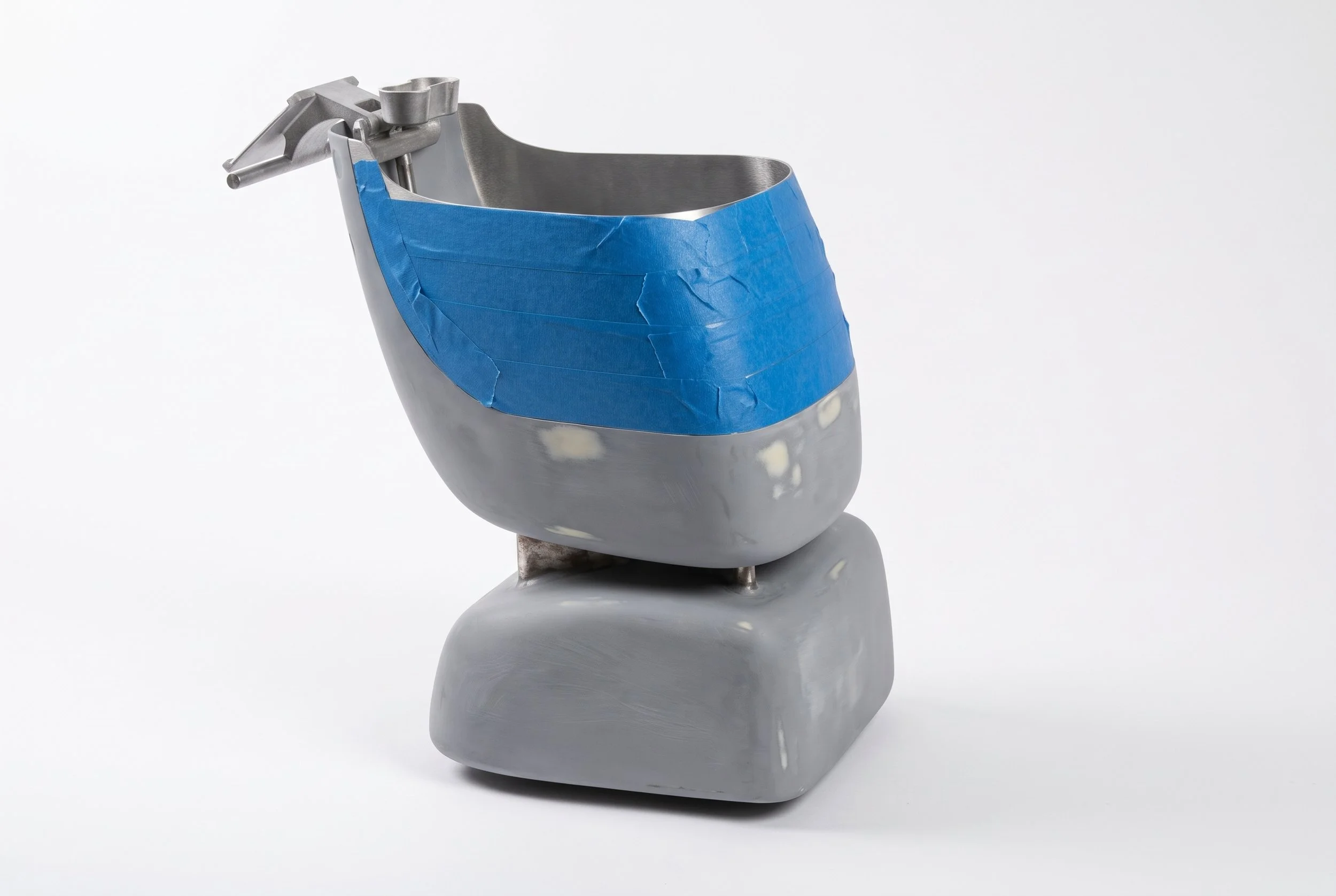
The build step the pandemic stopped.
The launch post.
From six days of drawings to the World Economic Forum
Balaji launched the design on Invento's Quora blog, crediting Bharath and me. That summer he took it to the World Economic Forum.
“In 2019, I was at the world economic forum, meeting up a VP from IDEO. I showed him a design from our company and he was floored. This is the world's best design company and he called all his team to show our concept designs. Darshan creates that.”
Balaji Viswanathan, founder and CEO, Invento Robotics
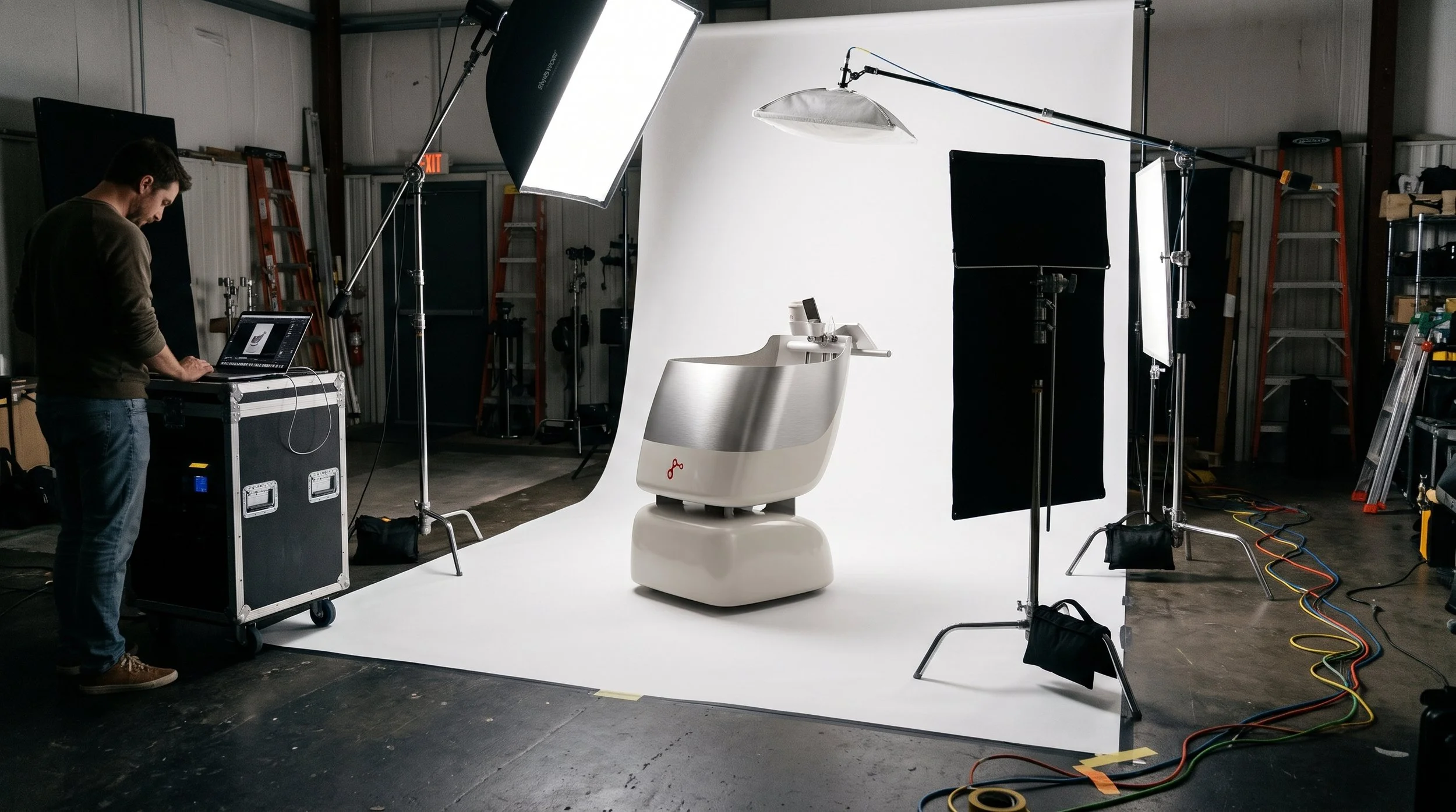
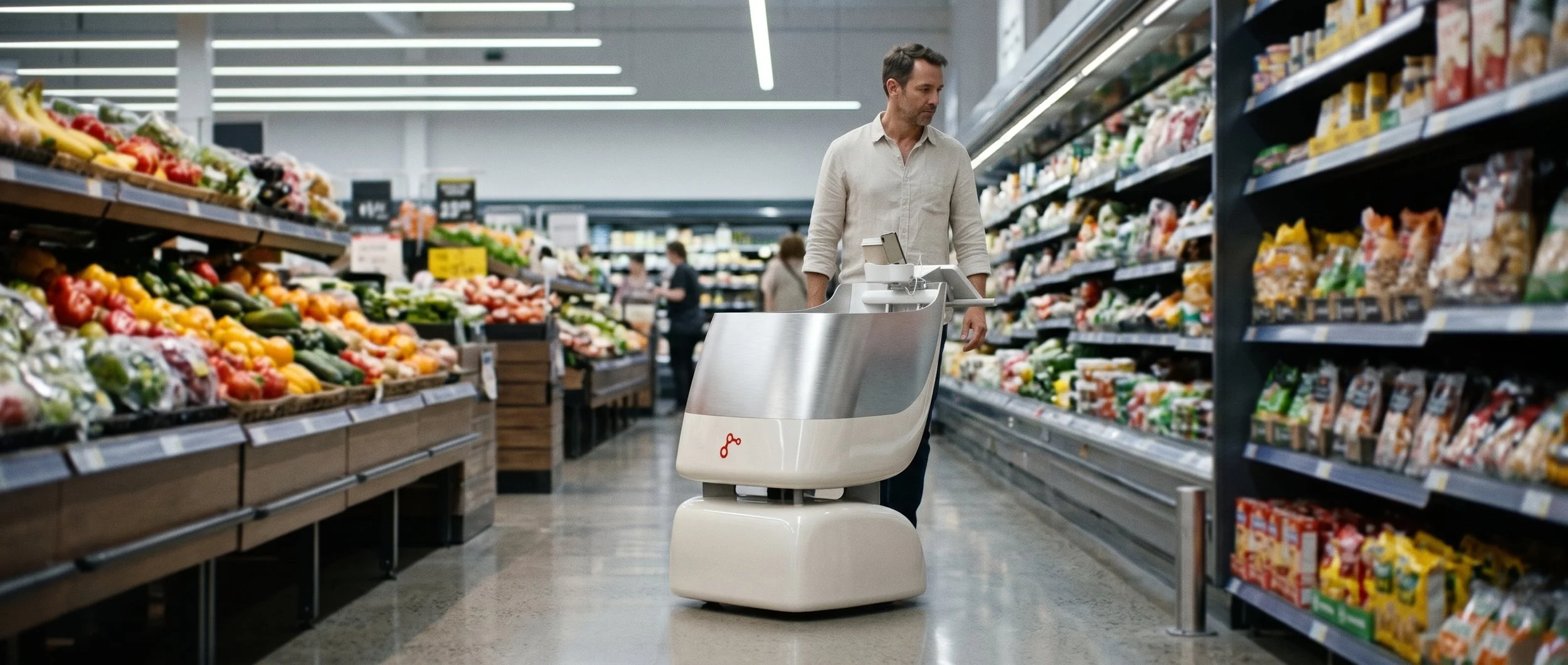
The finished prototype on set.
Then the pandemic closed stores to experiments, and Spod never reached an aisle.
From a box with a tablet to a cart worth following
What changed. An engineering prototype became a product with a reason behind every surface, and the face of Invento's pitch.
What I delivered. Critique, ergonomic study, moodboards, eleven sketches, two CAD generations, colour and finish, renders, native files and a mould plan.
What I would do now. Test a foam model in a real aisle. Design how Spod moves, not only how it looks. Make its camera visible, and let shoppers opt out.
Invento had built a robot that could find any shelf. The design made it something a shopper would walk beside.
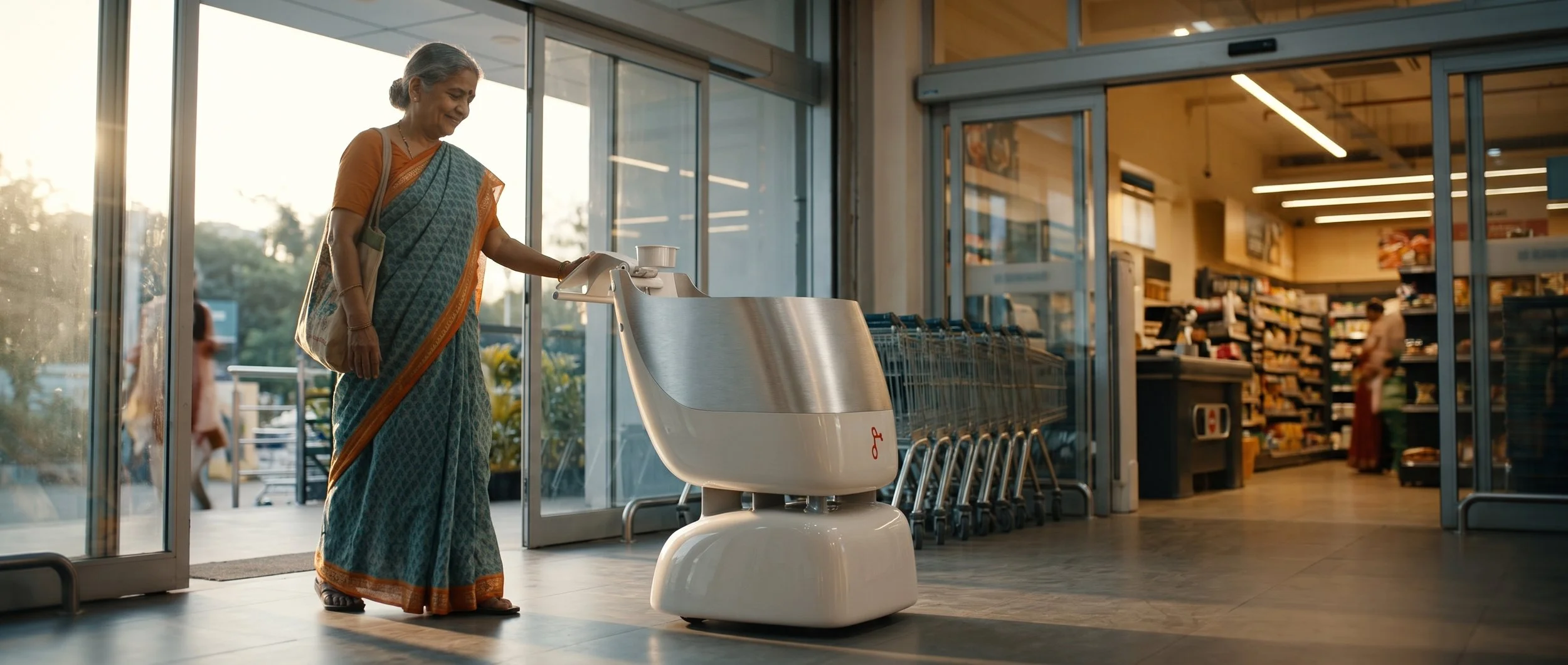
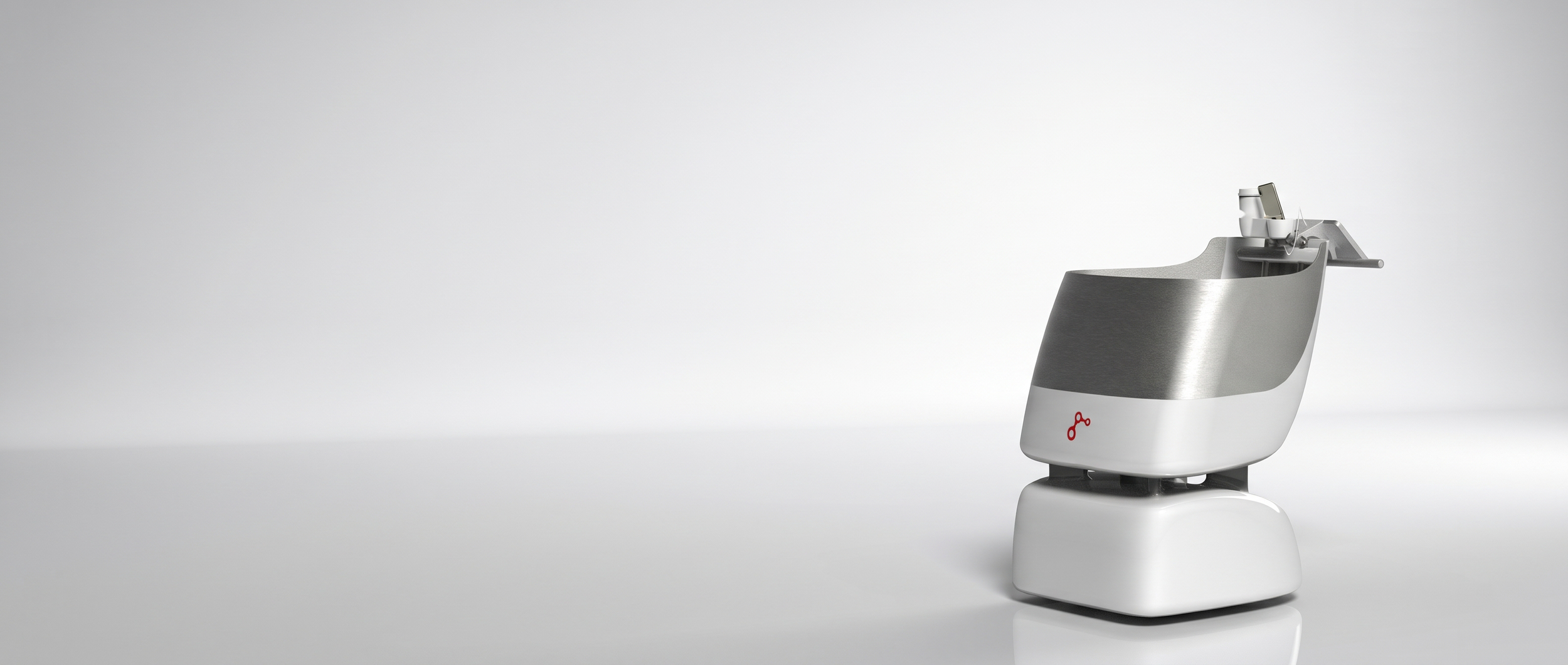
Spod meets a shopper at the door.